Game changers:
Clinical informatics team enhances nurse efficiency and patient care
In the world of modern healthcare, clinical informatics bridge the gap between technology and patient care. Jason Pierson, MSN, RN, NI-BC, system manager of Clinical Informatics, and Barbara Riddell, MSN, MHA, RN, NI-BC, system director of Clinical Informatics at OhioHealth, lead a passionate team dedicated to optimizing clinical workflows and integrating advanced technology across multiple care sites.
“CNI stands for Clinical Nurse Informaticist,” Pierson explained. “In layman’s terms, they are a conduit between clinical staff and Information Services (IS).” The role blends nursing expertise with informatics to improve processes and reduce the technology burden on healthcare providers.
Training and innovation are key components of the CNI role. New informaticists bring clinical experience — at least two to three years — and advanced education in informatics. While formal training is essential, much of their specialized knowledge is developed on the job.
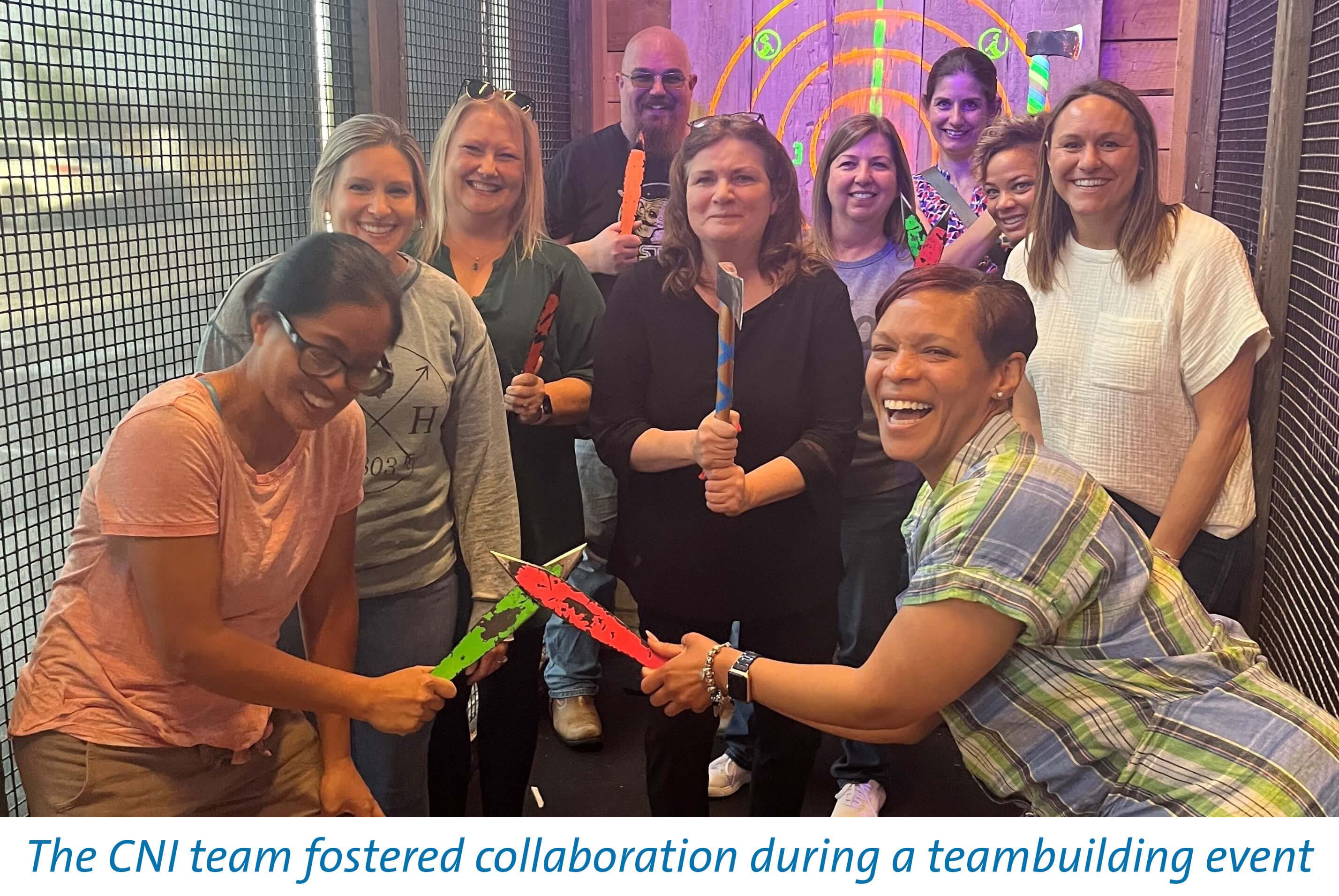
That on-the-job experience can vary too. One informaticist may specialize in obstetrics across the system while providing care site-specific support at the same time.
CNIs also play vital roles when regulatory agencies like the Joint Commission arrive, helping ensure compliance and quality care.
One of the most impactful projects the Clinical Informatics team works on involves system acquisitions. CNIs assess new care sites to align them with the rest of the OhioHealth system.
“It's a huge transition to acquire hospitals and we take on technical aspects, like what EMR (Electronic Medical Record) are they going to use,” Riddell said. “We also look at what their interfaces are and what their workflows are.”
Their work goes even beyond that though. The team supports areas like respiratory therapy, radiology, and care management, collaborating with clinical staff to identify and resolve potential workflow challenges before new systems go live.
Their goal in integrating acquisitions in a nutshell: to ease the transition and prevent disruptions.
A recent major milestone for the team was the implementation of Macros in the electronic medical record. Macros is a time-saving tool that significantly reduces documentation steps for nurses and helps support relationship-based care.
“Macros allow one click to perform multiple actions in a flow sheet,” Pierson explained. “Instead of clicking 20 to 25 times, it’s one click.”
Those saved clicks are adding up, too. Since the Macros rollout in the summer of 2024, the team has recorded a staggering 3.2 million clicks saved in a single month.
Riddell noted that nurses spend an average of 140 minutes per shift documenting. “If we can reduce that even by 10 minutes, it frees up time for direct patient care. It's just so much better for them to be at the bedside.”
The Clinical Informatics team’s work also extends into user acceptance testing for system upgrades and new technologies. They identify potential issues before they affect patient care, from fixing single sign-on problems to preventing dictation errors.
“We try to align associates beforehand, so we can help to identify issues or problems where there's a big difference between their current workflow and a new one,” Riddell said. “We help make sure that both sides understand the differences and what we need to do to get to what the overall system does.”
Despite the behind-the-scenes nature of their work, Pierson and Riddell emphasized that informatics is deeply rooted in nursing. Every efficiency their team creates means more time at the bedside.
“We really want to make sure that nurses’ lives are easier, and we certainly appreciate what they're doing every day,” Riddell shared.
Through their efforts, CNIs drive innovation, enhance workflows and ultimately, improve patient outcomes — making their work a true game-changer for OhioHealth nurses’ well-being and modern healthcare.